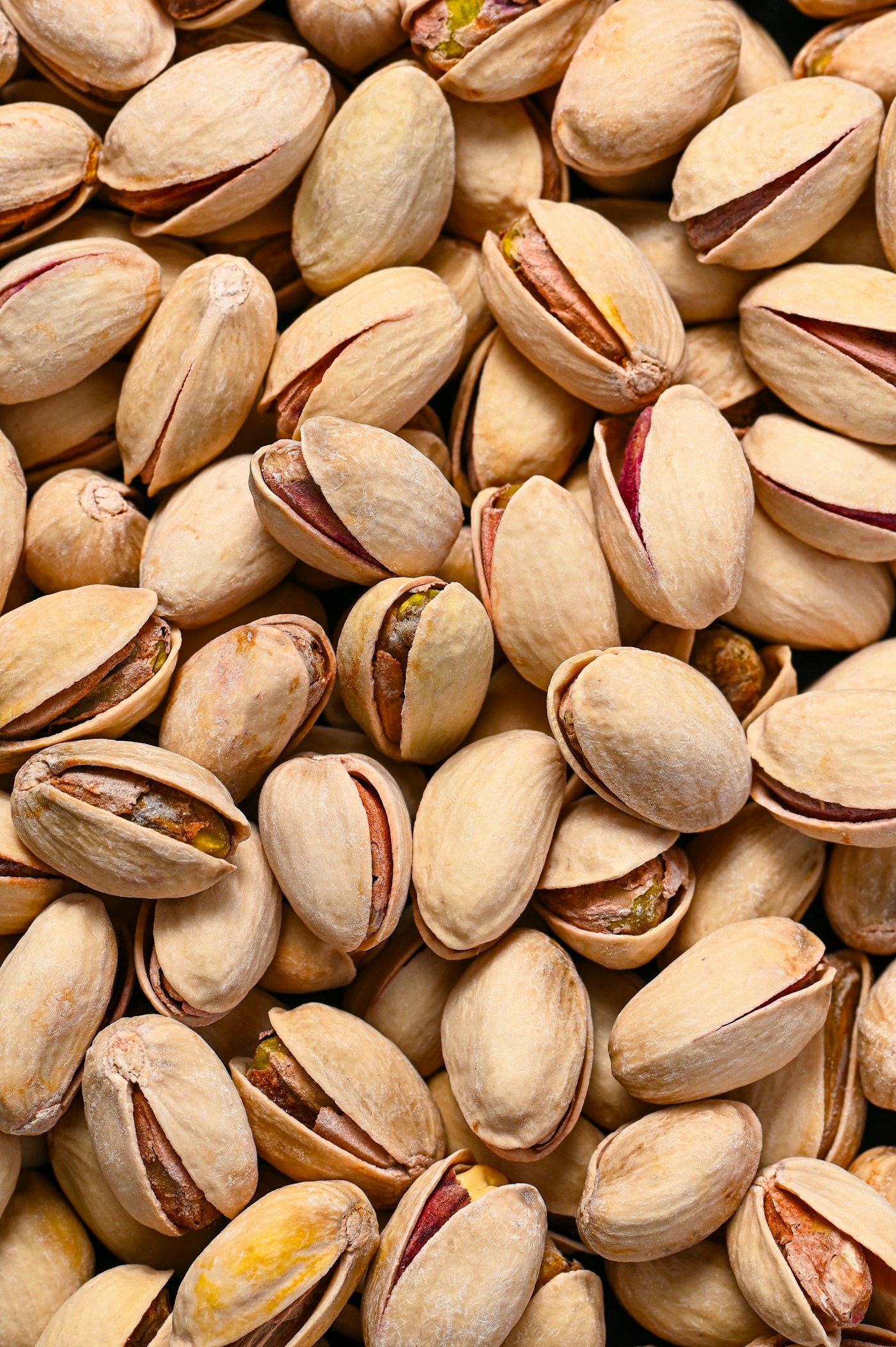
Pistachios provide plant protein, fibre and predominantly unsaturated fats. They also contain minerals including potassium, phosphorus and magnesium. This nutritional profile helps explain the interest in pistachios, but no single food is a complete solution for health.
Three distinctions help when choosing and enjoying them: what the nut contains, what research has examined, and how it fits into your overall diet. This guide separates general nutrition from promises about a particular product.
What nutrients do pistachios contain?
A review published in Nutrition Today describes pistachios’ nutritional profile and brings together information about their composition. Values vary with preparation and product; your bag’s label is the reference for its nutrient quantities.
- Fats: most are unsaturated, including monounsaturated and polyunsaturated fats. Pistachios also contain saturated fat; they are not fat-free.
- Plant protein: this is part of their composition and can add variety to the protein sources in a meal. A small portion does not automatically replace other foods.
- Fibre: it occurs in the nut itself. The amount in a finished dish depends on how many pistachios you use and the other ingredients.
- Minerals and other compounds: their profile includes potassium, phosphorus and magnesium, as well as carotenoids such as lutein and zeaxanthin. Their presence does not establish specific health effects from eating a bag of pistachios.
Figures in a general nutritional table are not an analysis of Green Beat pistachios. We do not transfer a publication’s numbers to our labels or use them to promise medicinal effects.
Nutrition and benefits: what does the research show?
Pistachio research includes trials examining body weight and metabolic indicators. These are useful questions, but findings must be interpreted in the context of the amounts, populations and time periods studied.
A meta-analysis of 12 clinical trials published in Critical Reviews in Food Science and Nutrition found favourable differences in some cholesterol and triglyceride measurements between study groups. It did not find a significant difference in HDL cholesterol. The authors called for larger studies. Read the meta-analysis abstract.
These results do not show that our products prevent disease or that pistachios can replace treatment. The overall diet remains important. If you need to adapt your diet for a health condition, a qualified professional can help assess your situation.
For body weight, a review of 11 trials found no significant difference between pistachio-containing diets and control diets. We explain the amounts studied and the limitations in Do pistachios cause weight gain?. We do not present pistachios as a weight-loss product.
Thinking about a portion
Serving an amount in a bowl helps you visualise it. You can weigh 30 g of kernels without hard shells as a practical example, not a required amount for everyone. A 250 g or 500 g bag contains several amounts of that size.
Shell weight is not part of the edible portion. When using a nutritional table or calculating a recipe, weigh the fruit you will eat. For the energy in 30 g, multiply the package’s kcal per 100 g by 0.30.
Consider how you include them: replacing another snack is different from adding an extra one. For salad, pesto or dessert, account for the dish’s other ingredients too.
Raw, roasted and unsalted pistachios
Green Beat’s raw pistachios come in shell and unroasted. Our roasted variety has no added salt. Your choice can depend on flavour preference and how you plan to use them.
The words “raw” and “roasted” alone do not tell you every product’s composition. Check the label: some preparations include oil, salt, sugar or other ingredients. “No added salt” describes preparation; it is not a sodium-free claim and does not mean calorie-free.
Compare preparation and uses in our guide to raw and roasted pistachios.
Ways to use pistachios in the kitchen
For cooking, shelled pistachio kernels save preparation time. Our kernels are raw and unroasted, and the fine skin may remain.
- In salad: add chopped pistachios when serving for texture.
- With pasta or vegetables: prepare pistachio pesto and adjust the texture with the recipe’s ingredients.
- On toast or as an ingredient: try our homemade pistachio spread made with kernels alone. It still provides the energy of the nuts despite having no added sugar.
- As an aperitif: serve raw or roasted pistachios without added salt, then close the remaining bag well.
Common questions about pistachio nutrition
Do organic pistachios contain more nutrients?
Organic certification identifies production and preparation conditions. On its own, it does not establish that a product has more protein, fibre or minerals than another. Check our origin and certificate on the Green Beat organic pistachios page.
Does pistachio spread have the same composition?
A paste made only from pistachios keeps that ingredient while changing its texture. A spread containing sugar, oils or other ingredients has a different composition: read its ingredient list and nutritional information.
Are pistachios suitable for everyone?
Pistachios are a tree nut and an allergen. They are unsuitable for someone allergic to them. Individual needs may require dietary adjustments; this guide does not replace a personal assessment.
Sources and editorial approach
Prepared by the Green Beat team on 10 November 2026. We distinguish general composition, research findings and confirmed characteristics of our products. The composition review received funding from American Pistachio Growers for open-access publication; one author disclosed membership of the International Nut Council’s scientific advisory council. This context helps readers evaluate the sources.
- Hernández-Alonso and colleagues (2016). Pistachios for Health: What Do We Know About This Multifaceted Nut? Nutrition Today. Full composition review.
- Hadi and colleagues (2023). Consumption of pistachio nuts positively affects lipid profiles: A systematic review and meta-analysis of randomized controlled trials. Critical Reviews in Food Science and Nutrition. Article and abstract.
- Xia and colleagues (2020). The relationship between pistachio (Pistacia vera L) intake and adiposity: A systematic review and meta-analysis of randomized controlled trials. Medicine. Full weight meta-analysis.